
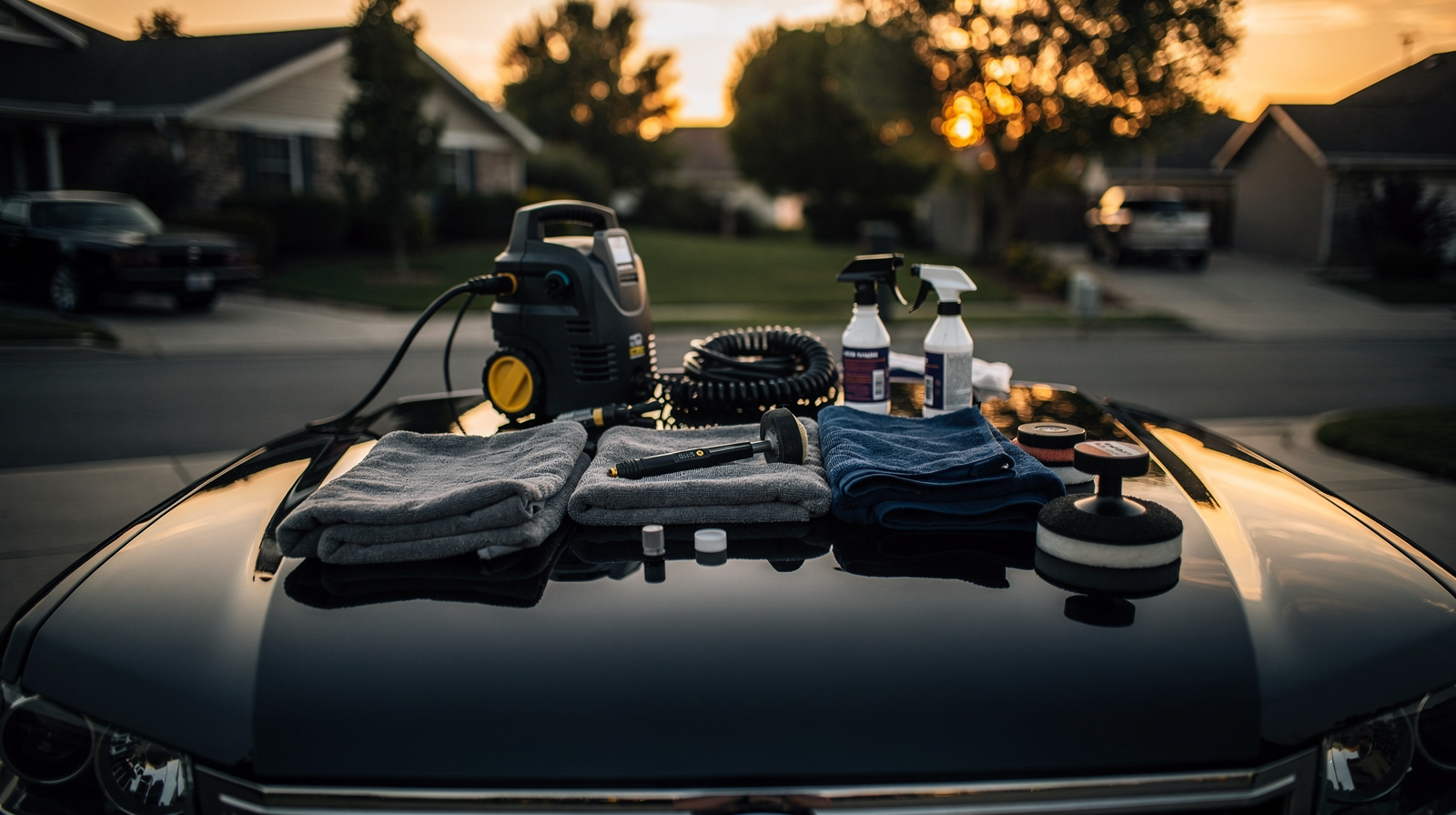
Most new detailers spend weeks picking a logo, building a website nobody visits, and setting up an Instagram page with nine followers, six of them family. After all that? Zero clients and zero dollars in the bank.
I’ve been there. When I first started my detailing business, I invested thousands into tools and products, detailed a few cars for friends, earned some decent cash, and then the phone stopped ringing. My calendar was blank like a white piece of paper. I was confused as to what I was doing wrong. I just figured I’d set the business up and people would come knocking.
That’s not how business works.
So I built a method I now call the First 10 Playbook. It’s what I used myself and what I walk every new Academy member through on their onboarding call. You don’t need ads. You don’t need a website. You don’t need an Instagram following. You just need 10 paying clients. 10 people who hand you money to detail their car.
This article breaks down exactly how to get them.
Step 1: Build One Clear Offer (Not Twenty)
The First 10 Playbook starts with a single, simple service that your customer actually wants and that you can deliver profitably. Beginners overwhelm themselves with too many services, which confuses customers and kills conversions. One clear offer is all you need to get your first 10 clients.
Here’s the thing most detailers get wrong early on. They make this fancy list of 12 services, hand it to a customer, and the customer either picks the cheapest option or doesn’t pick anything at all. Why? Because you gave them what they wanted, the price, before they understood the value.
So keep it dead simple. I always recommend starting with one core service: a full detail. That means a full interior deep clean, full exterior wash, and three to six months of protection on the paintwork.
That’s it. One offer.
“There’s no point offering 20 different services when you haven’t even honed in the first service,” is what I tell every new member on their first call. The customer doesn’t care about your logo. They don’t care about your business name. They care about whether or not you can give them the outcome they want, which is a nice, clean car.
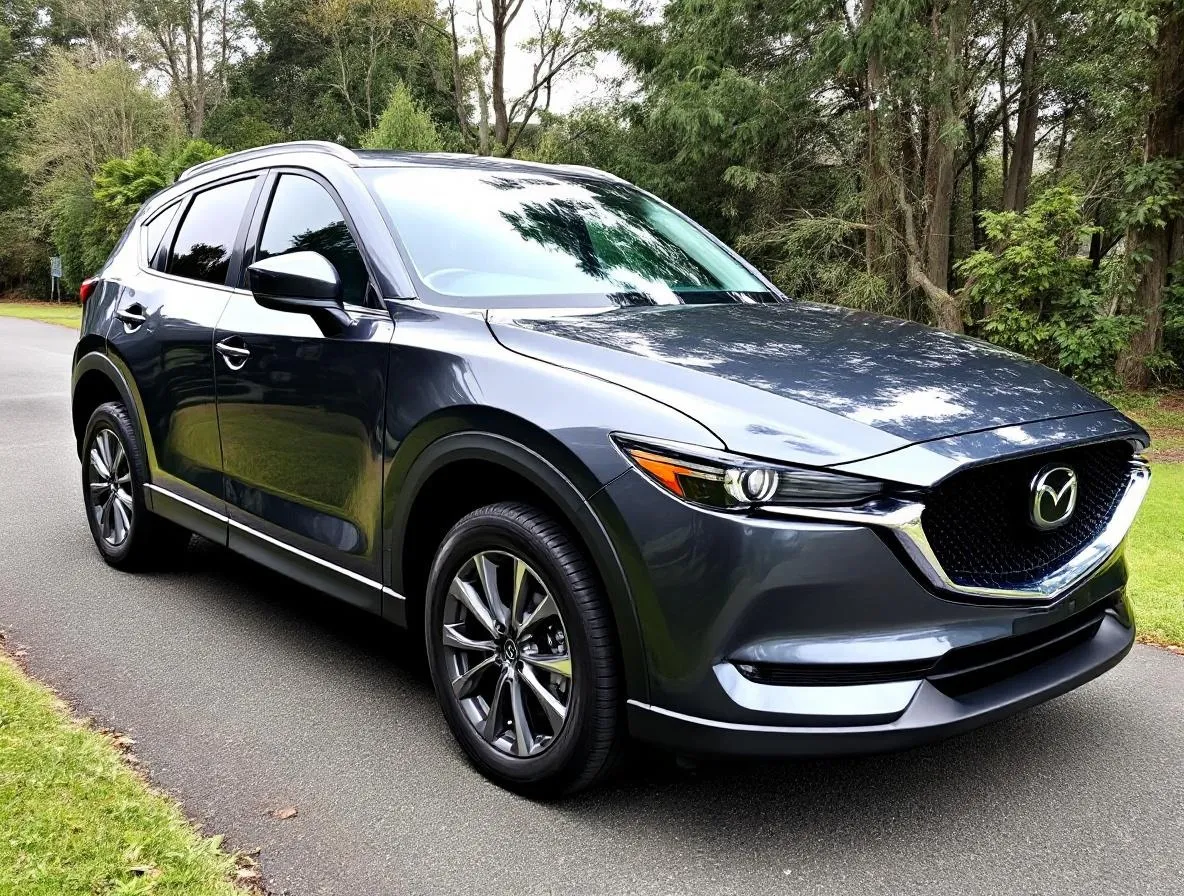
If you already know how to do paint enhancement and ceramic coatings, great. You can add that as a second service. But for the First 10 Playbook, one core offer is all you need to start having real conversations.
Step 2: Message Your Entire Network
Your existing contacts are already warm leads who know and trust you. Message every single person on your phone, your DMs, and your email who might need a car detailed. The only way people will know you’ve started a business is if you actually tell them.
This step is simple but most people skip it because it feels uncomfortable. Here’s reality: if you don’t have a website, you’re not running ads, and you don’t have social media profiles working for you, then the only way to let people know you have a business is to literally tell them yourself.
You are the biggest marketing billboard in your business right now.
So what does the message look like? Something like this:
“Yo, what’s up? I just started a car detailing business. I know you’ve got a really nice car, and I know it’s probably due for a clean. How about you let me take care of it? I’m offering my first 10 customers a sweet deal.”
Now, I’m very careful with discounts normally. But when you’re starting out, it’s appropriate. You could price your full detail at $300, cut it to $150 for your first 10 customers. The discount gives people an incentive to say yes, and you get cars on the calendar so you can practice, take photos, and build momentum.
Friends and family, for some reason, expect a friends and family discount. It’s kind of backwards. You’d think they would want to support you and pay full price. But whatever. If your friends and family only want to use your service because of a discount, so be it. You still get a customer, you still make some money, and you have an opportunity to dial in the process.
Step 3: Boots on the Ground, Starting With Your Street
Going door to door in your own neighborhood is the fastest free method to book detailing clients when you’re starting from zero. It’s intimidating, it’s not scalable, but the goal right now isn’t to scale. The goal is to get your first 10 customers, and this is the easiest way to get them.
I literally went outside, talked to real people, and booked real jobs. No ads, no website, no following. Just boots on the ground.
Here’s how it works. Walk down your street, knock on a door, and say something like:
“Hey, it’s Aaron from down the road. I’ve just opened up a car detailing business and I’m introducing myself to neighbors in the area. You’ve got a beautiful car in the driveway. When was the last time it was detailed?”
Then you start a conversation. You build rapport. You ask questions. You don’t lead with the price. You don’t pitch hard. You just have a genuine conversation with a real person.
This is critical: don’t focus on the pitch. If you walk up and say, “I charge $300 for a full detail, can I do your car?” they’re not going to be interested. You need to warm them up, and the way you do that is by building a genuine connection. You’re their neighbor, after all.
Think of it as a numbers game. When I was out there doing boots-on-the-ground outreach, I would typically book in about one in every 10 people I spoke to. That means to get 10 customers, you need roughly 100 conversations. Sounds like a lot, but spread over a few days of walking your neighborhood and surrounding streets, it’s completely doable.
Don’t get disheartened when people say no. The goal is not to get 100 yeses. The goal is to have 100 conversations and turn a handful of them into paying clients.
Step 4: Visit Local Businesses (This One’s Less Intimidating)
Local businesses already have their doors open to the public, which makes this less scary than knocking on private homes. The key is thinking about which businesses have your ideal customer either as staff members or as their own customers.
There are two ways I think about this.
First, there are businesses where you want access to their staff members. These are businesses where the staff drive nice cars. Think real estate agencies. Their agents have to look professional, take clients around, and drive presentable vehicles. Walk into a real estate office, introduce yourself, and offer a deal for their team.
Second, there are businesses where you want access to their customers. A premium gym. A golf course. A high-end barbershop. These places have your ideal customer hanging out at them. Busy professionals who drive reasonably nice cars and don’t have time to clean them.
So ask yourself: who is my ideal customer? It’s a busy professional who drives a decent car and doesn’t have time to detail it themselves. That’s not an 18-year-old working at McDonald’s. We’re not going to McDonald’s.
Write down a list of 20 local businesses that fit one of those two categories. Then get out there and start having conversations. Same approach as the neighborhood: lead with genuine interest, not with a pitch.
Step 5: Set Up a Simple System to Track Every Lead
Once you start generating inquiries from your network, your neighborhood, and local businesses, you need one simple place to track every lead so nobody falls through the cracks. Most first-time detailers lose clients not because people weren’t interested, but because they never followed up.
This is something I drill into every new member. “There’s two parts to client acquisition,” is what I explain on every onboarding call. “There’s the marketing, which creates the awareness and brings people into our world. And then there’s sales, which converts those people into customers.”
The gap between those two parts? Follow-up.
You don’t need anything fancy to start. A simple spreadsheet works. Record the person’s name, phone number, what service they were interested in, and when you last contacted them. Later, when you’re ready to scale, you can move to a proper CRM. But right now, all you need is a place to write down every single lead and a reminder to follow up.
Follow up, follow up, follow up. That’s the game.
Here’s what happens if you don’t: you talk to someone on Tuesday, they seem interested but say “let me think about it.” By Friday you’ve forgotten about them. They’ve forgotten about you. That’s a lost customer.
Instead, text them Thursday morning: “Hey, just checking in. Still want to get that detail booked in for next week?” Simple. Not pushy. Just a nudge.
The detailers who track their leads and follow up consistently are the ones who fill their calendars. The ones who don’t are the ones sitting at home wondering why nobody’s calling.
Pricing Your First 10 Jobs So You Actually Profit
Your prices during the First 10 Playbook should balance getting people to say yes with making the work worth your time. Undercutting the market will attract bad clients and burn you out. Even at a discount, your pricing needs to leave money in your pocket after chemicals, fuel, and time.
Here’s some simple math to put it in perspective. If you charge $100 per job, you need 50 jobs to hit $5,000 in a month. That’s going to take you weeks. If you charge $350 per job, you only need about 14 jobs. If you charge $500 per job, you need 10. And if you’re doing ceramic coatings at $1,000 per job, you only need five.
I would rather find five people willing to pay $1,000 than 50 people willing to pay $100. It’s also much easier.

So even for your first 10 clients, don’t race to the bottom. If the market rate for a full detail in your area is $300, offer it at $150 for your first 10. That’s still profitable and you’re not training your local market to expect bargain prices from you.
Cheap prices attract cheap clients. This is one of those truths that sounds cliche until you live it. The guy who haggles you down to $80 for a full detail is the same guy who complains about a spec of dust on the dashboard.
What Happens After Your First 10
The First 10 Playbook isn’t a forever strategy. Boots on the ground and network messages are not scalable. But they are the fastest way to go from zero clients to real momentum, real cash flow, and real before-and-after photos you can use for everything that comes next.
Once you’ve got your first 10 clients done, you should have:
- Cash in the bank to reinvest into marketing
- Photos and videos of real work on real cars
- Reviews you can ask those 10 clients to leave on your Google Business Profile
- Confidence that people will actually pay you to detail their car
- A basic system for tracking leads and following up
From here, the playbook shifts. You optimize your Instagram profile so it builds trust instantly when someone lands on it. You get your Google Business Profile verified and start stacking reviews. You set up Meta ads to generate leads consistently without having to knock on doors. You build a proper CRM so you can manage 30, 40, 50 leads a week without anything slipping through.
But all of that is phase two. Phase one is just getting 10 people to pay you. Everything else builds on top of that foundation.
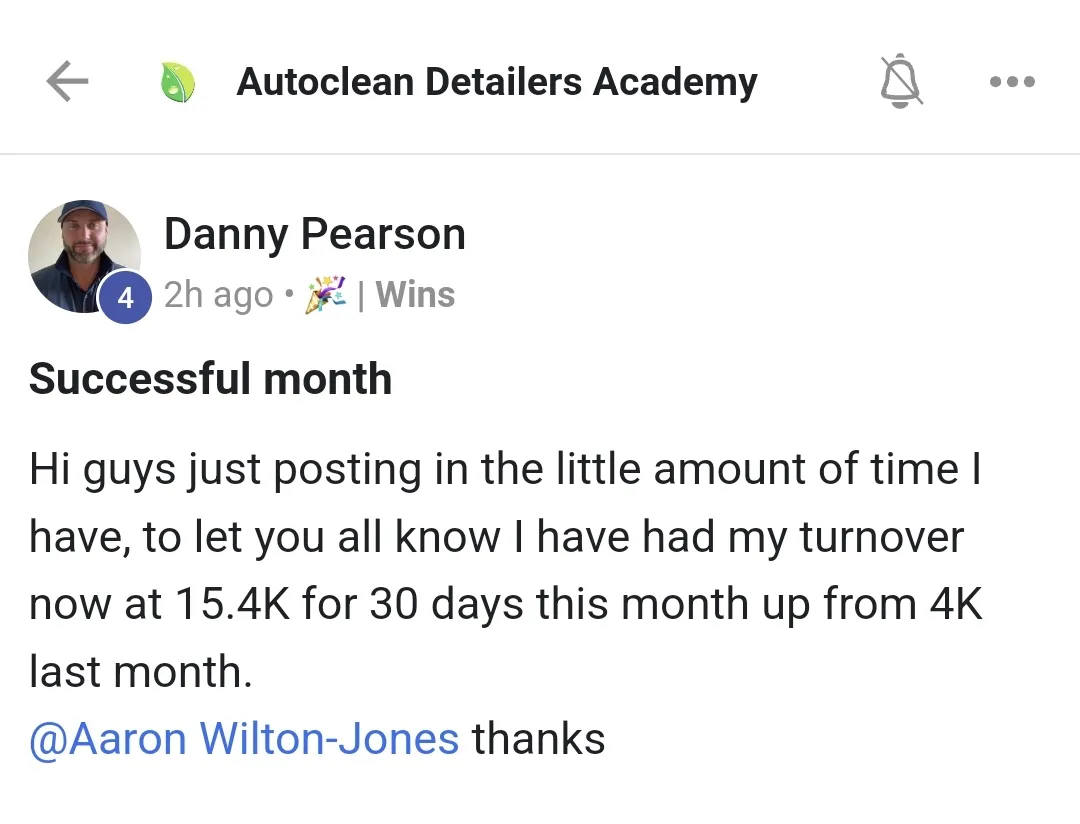
The results compound fast once the system is in place. Danny Pearson went from $4K to $15,400 in a single month after implementing the full system.
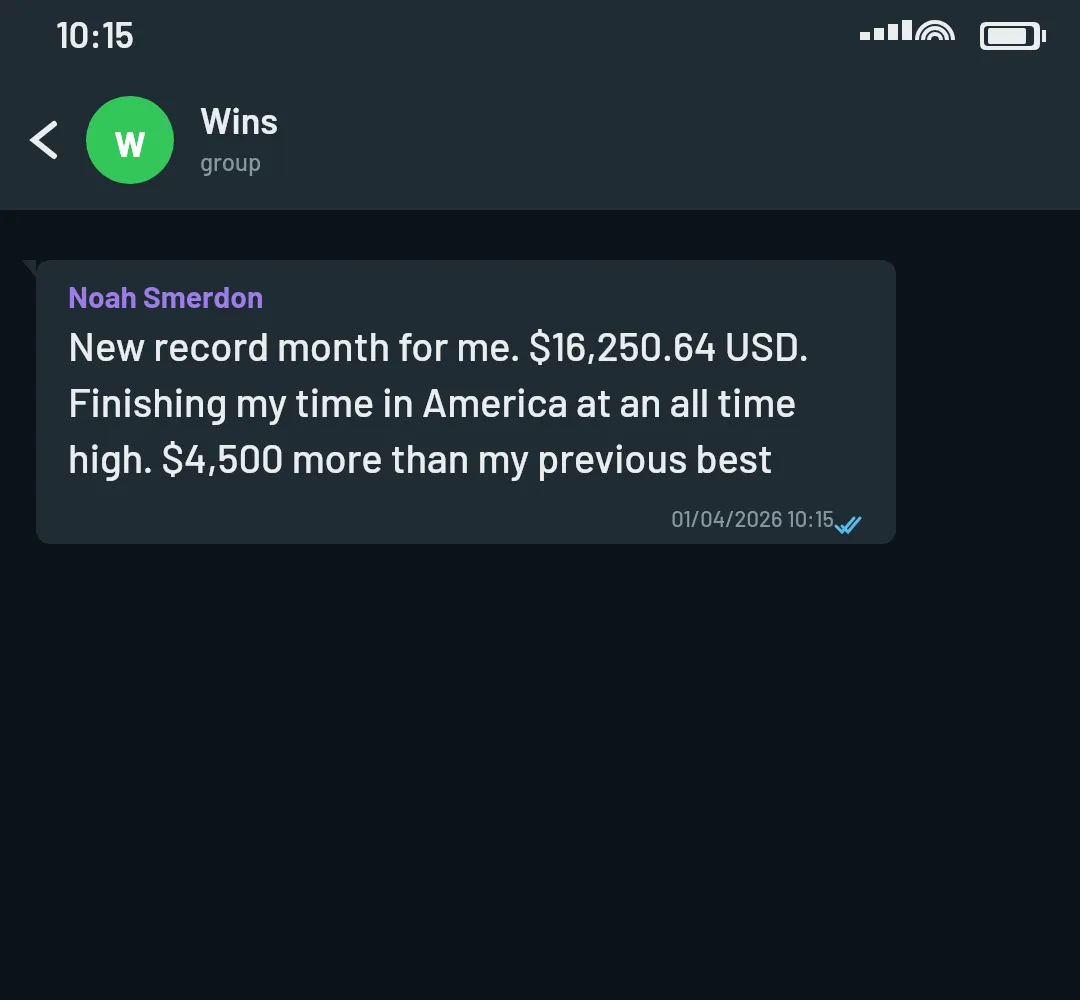
Noah Smerdon hit a new record month of $16,250.64.
Those numbers didn’t happen from boots on the ground alone. They happened because these detailers got their first clients, built the foundation, and then installed a proper system on top of it. The First 10 Playbook is where that entire journey starts.
The Biggest Mistake New Detailers Make
You focus on the brand before you focus on getting paid. You spend weeks choosing a name, designing a logo, building a website that nobody visits, and tweaking your Instagram grid. Meanwhile, zero dollars are coming in.
I see this constantly. I had someone on a call recently who had been “starting” his detailing business for months. He had all the tools, all the equipment. But he hadn’t done anything to actually get clients. “Just word of mouth, that’s all.” And that word of mouth had dried up.
The real problem, as I explained on that call, was simple: “You just don’t have a clear client acquisition system that brings in consistent inquiries every single week.”
You need to get paid before you build the brand. You are the brand. Your skill is the brand. Everything else, the logo, the website, the van wrap, that comes later. Right now, the only thing that matters is having conversations with real people who might want their car detailed.
The First 10 Playbook, Summarized
Here’s the full framework, step by step:
- One clear offer. Full detail. Interior, exterior, protection. Simple.
- Message your network. Every contact, every DM, every email. Tell them you exist.
- Boots on the ground. Walk your neighborhood. Knock on doors. Have real conversations.
- Visit local businesses. Real estate offices, gyms, golf courses. Go where your ideal customer already is.
- Track every lead. Spreadsheet at minimum. Follow up within 24 hours. Follow up again if they don’t respond.
That’s it. No ads. No website. No fancy CRM. Just your phone, your mouth, and your legs.
If you follow the process, you’ll stop relying on luck. You’ll have 10 paying clients, real momentum, and a foundation to build a proper business on top of.
The bottleneck of any detailing business is demand. Solve that first. Everything else gets easier.
If you want help installing the full system, the ads, the CRM, the sales process, the follow-up cadence, that’s exactly what we build inside Autoclean Academy over six months. But step one is always the same. Get your first 10 clients. Then we scale.
Frequently asked questions
How long does it take to get your first 10 detailing clients?
Based on my coaching experience, most detailers can land their first 10 paying clients within 7 days if they follow the First 10 Playbook and commit to having real conversations every day. The pace depends on how many people you talk to. If boots-on-the-ground outreach converts roughly one in 10 conversations, you need about 100 conversations across your network, neighborhood, and local businesses.
Do I need a website or social media to get my first detailing clients in 2026?
No. The First 10 Playbook works without a website, Instagram following, or any online presence. Your first 10 clients come from direct conversations with people in your network, your neighborhood, and local businesses. Once you have cash flow and before-and-after photos from those first jobs, then you set up your online assets.
What should I charge for my first car detailing jobs?
Depending on your market, I recommend pricing your full detail at the local market rate and offering a discount of up to 50% for your first 10 clients. If the market rate is $300, charge $150 for the first 10. This gives people an incentive to say yes while still keeping the work worth your time. Don't go below a price that covers your chemicals, fuel, and a reasonable hourly rate.
What services should I offer when first starting a detailing business?
Start with one core service: a full detail that includes a full interior deep clean, full exterior wash, and three to six months of paint protection. Based on Academy member data, the detailers who keep their service offering simple in the beginning convert more leads and build momentum faster than those offering a long list of options.
How do I get detailing clients without spending money on ads?
Message every contact in your phone and DMs to tell them you've started a detailing business. Then go door to door in your neighborhood and visit local businesses like real estate offices, premium gyms, and golf courses. In my coaching experience, this boots-on-the-ground method is the fastest way to get clients when you're starting from zero.
Is door knocking actually effective for getting car detailing clients?
Yes, but it's a numbers game. In my own experience when starting out, I booked roughly one in every 10 people I spoke to on the day. It's not scalable long term, but it's the fastest free method to fill your calendar when you're brand new. The key is leading with a genuine conversation, not a hard pitch.
What should I do after I get my first 10 detailing customers?
Use the cash, photos, and reviews from your first 10 jobs to build your online presence. Get your Google Business Profile verified and stack reviews. Optimize your Instagram. Then consider Meta ads and a CRM to generate and manage leads at scale. The First 10 Playbook is the foundation. Everything else builds on top of it.
How much can a car detailing business realistically make per month in 2026?
Based on Academy member data, detailers regularly hit $10,000 to $16,000+ per month once they have a proper system in place. Noah Smerdon hit $16,250.64 in a single month, and Danny Pearson went from $4K to $15,400 in a month. Results depend on your market, service mix, and how consistently you follow the system.